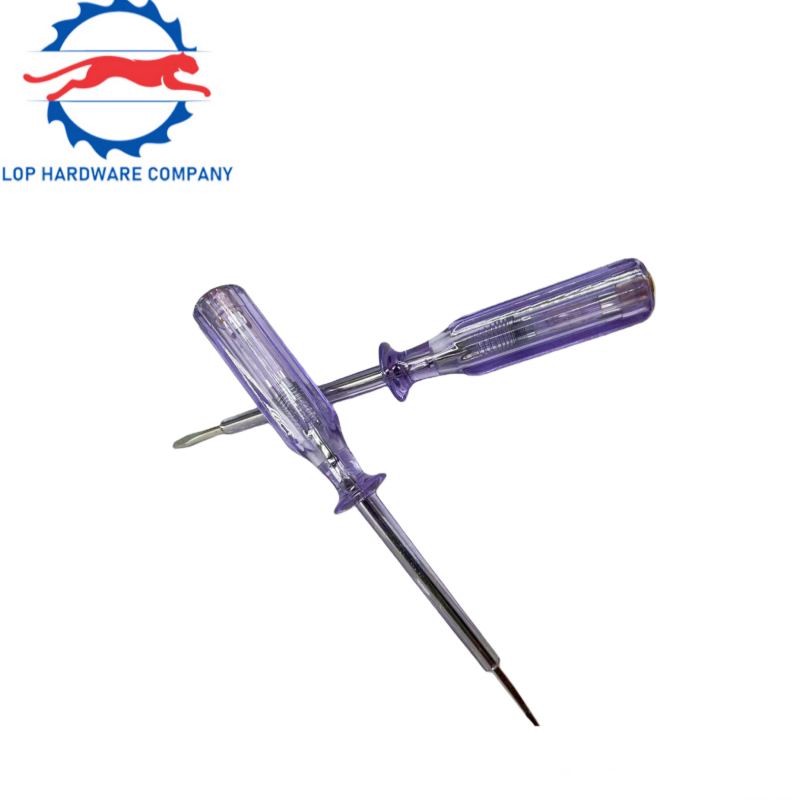
Product Name: Blue Transparent "Yizi" Style Neon Electric Tester (Screwdriver-Type Voltage Detector)
Overview:
The Blue Transparent "Yizi" Style Neon Electric Tester, commonly known as a neon voltage tester screwdriver or test pen, is a fundamental, reliable, and manually operated tool for basic electrical detection. Its primary function is to verify the presence or absence of AC voltage in electrical circuits, outlets, switches, and other components, ensuring safety before electrical work.
Key Features & Components:
-
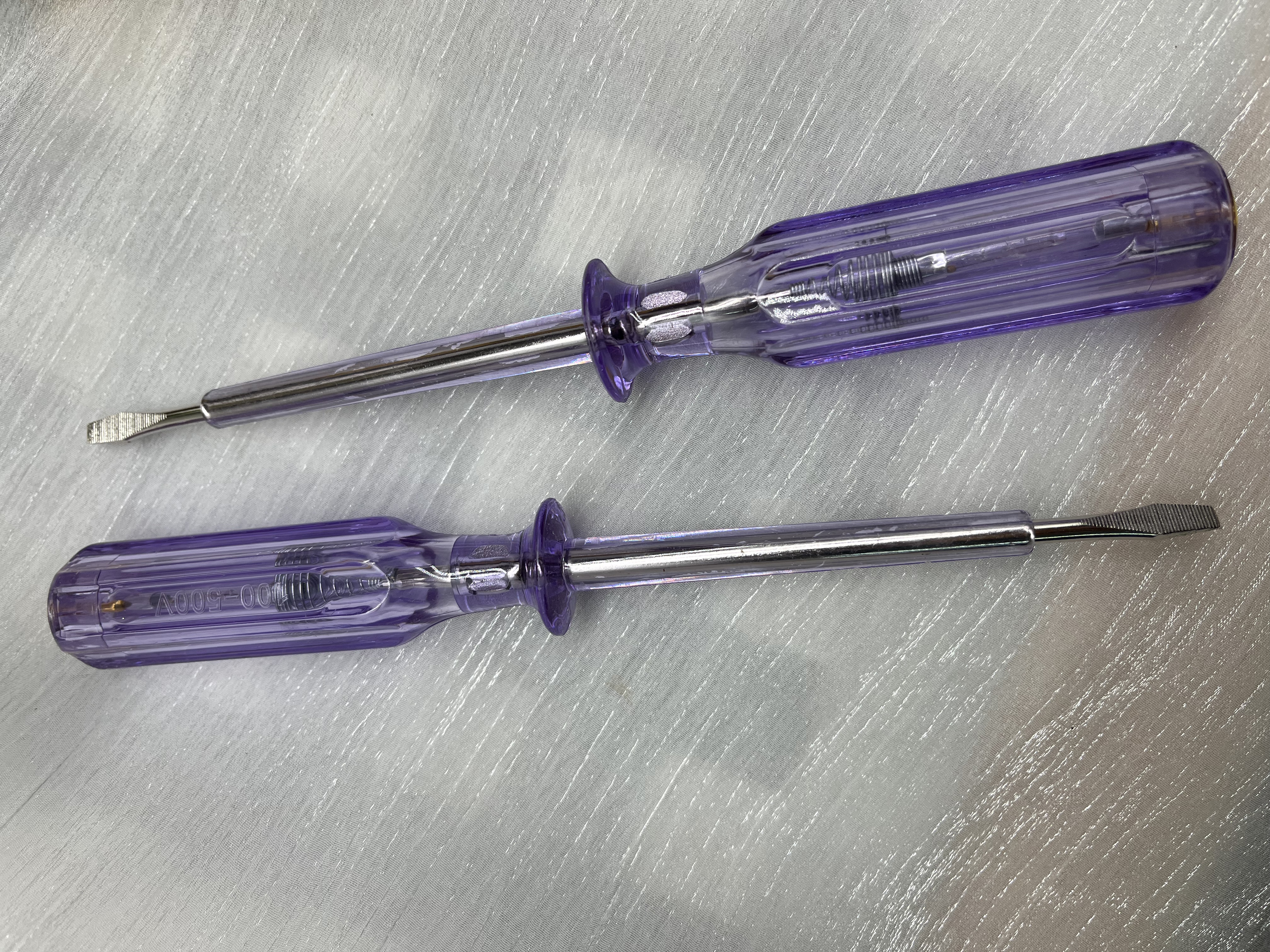
Transparent Blue Handle & Body: Made of durable, insulating plastic. The transparency allows clear visibility of the internal components and the neon glow. The blue color offers distinct visual identification.
-
"Yizi" (Flat/Straight) Head: Features a standard flat-blade screwdriver tip. This serves a dual purpose:
-
Internal Circuit & Neon Glow Lamp:
-
The core component is a small neon bulb (NE-2 type or similar) housed inside the handle.
-
It is connected in series with a high-resistance resistor (typically several megaohms). This resistor is crucial for safety, as it severely limits the current flowing through the user's body to a safe, microampere level when testing.
-
Metal Contact (Cap/Butt End):
-
Spring & Insulation: Internal spring ensures good contact, and robust insulation separates the metal shaft from the handle to protect the user.
Working Principle:
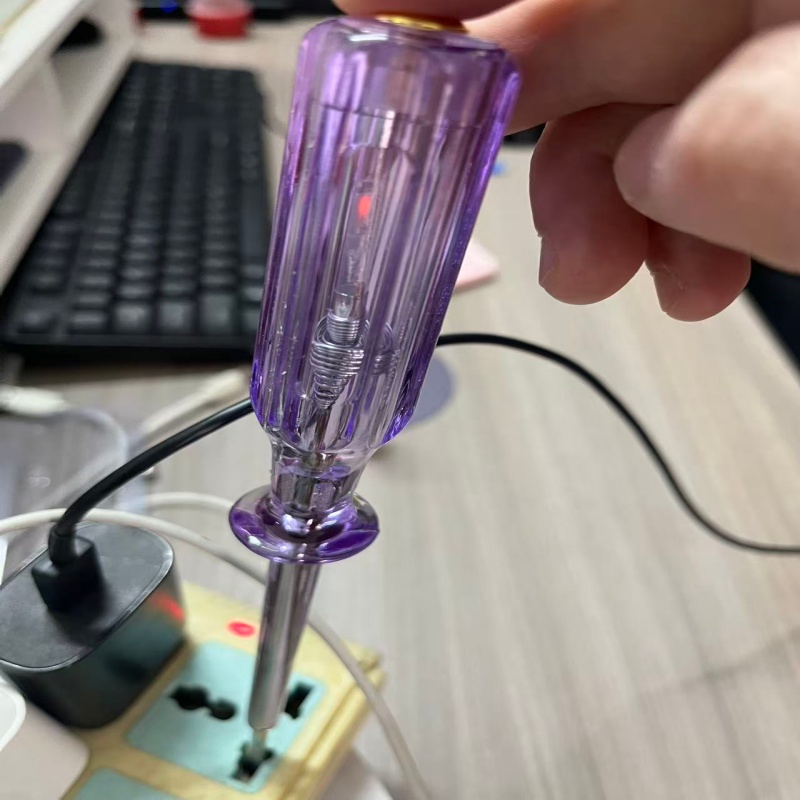
The tester operates on capacitive coupling and minimal current flow. When the tip contacts a live AC voltage source (typically 100-500V AC) and the user touches the rear metal contact, a tiny current flows through the internal resistor, neon bulb, through the user's body, and to earth ground. This current is sufficient to ionize the gas inside the neon glow lamp, causing it to emit a characteristic bright orange-red glow, indicating the presence of voltage.
Technical Specifications (Typical):
-
Voltage Detection Range: 100V - 500V AC (Commonly 110V/220V/240V).
-
Current Limitation: The series resistor limits current to a safe level (<1mA).
-
Insulation: Basic insulation suitable for low-voltage applications.
-
Compliance: Generally meets basic electrical safety standards (e.g., IEC 61010).
Operation Instructions:
-
Confirm Scope: Ensure the voltage is within the tester's range (standard AC mains).
-
Touch Contact: Firmly place your finger on the metal cap/end contact.
-
Apply Tip: Gently touch the tip to the conductor being tested (e.g., a slot in an outlet, a terminal screw).
-
Observe: Look at the transparent handle. A clear neon glow confirms live voltage. No glow indicates no voltage (or voltage below the threshold).
-
Verify: Always test on a known live source first to confirm the tester is functioning.
Primary Applications:
-
Quickly checking if a circuit, wire, or terminal is energized (live).
-
Identifying the live (phase) conductor in AC wiring.
-
Basic fault-finding in domestic electrical installations.
-
Verifying power presence before maintenance.
-
Serving as a simple insulated screwdriver for live terminals (with caution).
Safety Warnings & Limitations:
-
NOT for DC Voltage: This tester is designed for AC only. It will not glow or may glow weakly with DC.
-
Low Voltage Limit: Cannot reliably detect voltages below ~70-100V AC.
-
No Voltage Reading: Does not indicate the exact voltage level, only presence/absence.
-
Circuit Dependency: May not glow if the circuit path to ground is incomplete (e.g., in isolated circuits). A false negative is possible.
-
Safety Check: Always test on a known live source before and after use to confirm functionality.
-
Professional Use: For complex or critical systems, use a digital multimeter (DMM) or a professionally rated voltage detector.
-
Physical Inspection: Do not use if the housing is cracked, damaged, or the resistor/neon bulb appears faulty.
Conclusion:
This Blue Transparent Neon Voltage Tester is a classic, inexpensive, and straightforward tool for electricians, technicians, and DIY enthusiasts for preliminary voltage checks. Its neon glow lamp provides a clear, unambiguous visual warning. However, understanding its limitations and adhering to strict safety procedures is paramount. It should be considered a first-step safety device rather than a comprehensive diagnostic tool.